



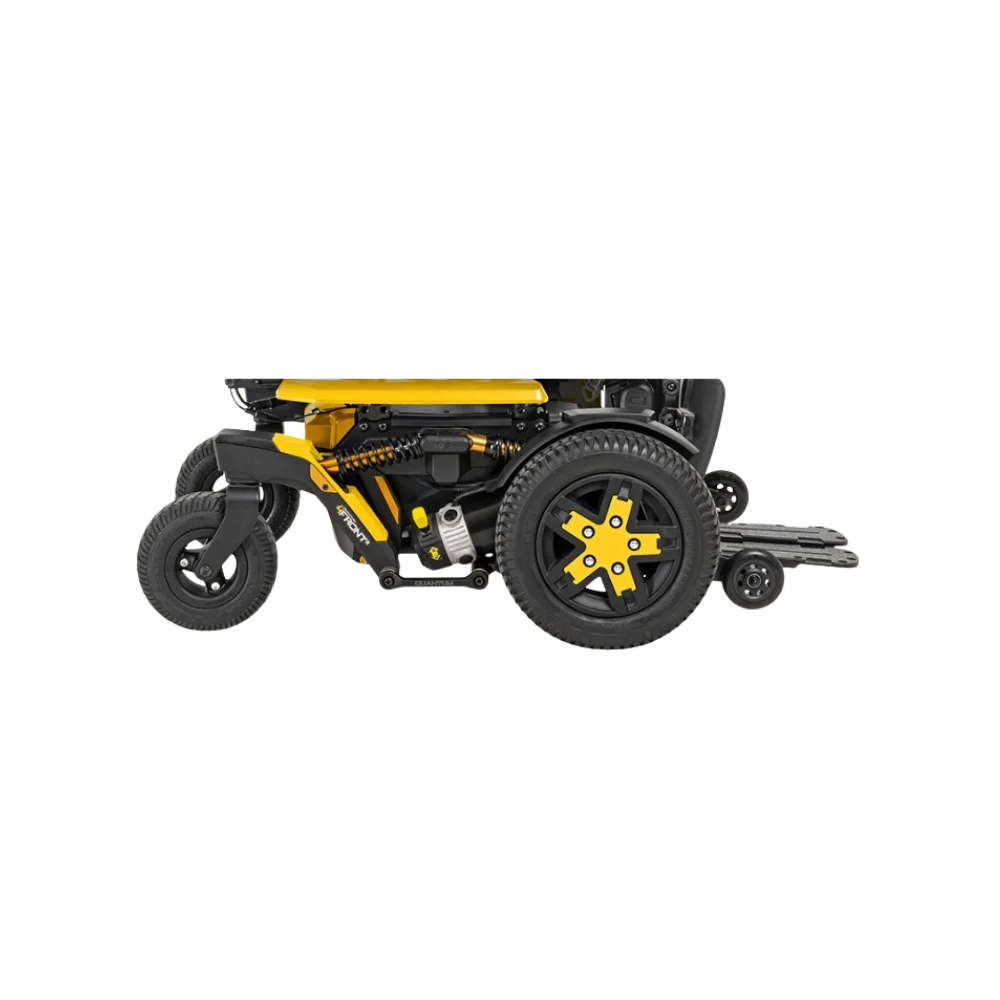
When selecting a base for a complex rehab power wheelchair, the drive wheel configuration is an important factor. Front-wheel drive offers several advantages compared to mid-wheel or rear-wheel drive, depending on the user’s environment and needs.
Advantages of front-wheel drive
-
With front-wheel drive, more weight is placed on the drive wheels, which increases traction. This helps the chair perform better on softer surfaces such as grass or loose gravel.
-
The drive wheels are at the front and encounter obstacles first. The larger wheels can climb over curbs or small steps, pulling the rest of the chair along.
-
Users’ feet can be positioned closer to the body because there are no front casters, which improves comfort. 90° footrests can also be added.
-
Front-wheel drive allows a lower seat-to-floor height. This helps the chair fit under tables and desks more easily, enhancing social interaction and accessibility.
-
Indoor performance is also improved, as tight corners and small spaces can be navigated more easily.
Example model
Quantum Rehab cites the 4Front® 2, a front-wheel drive power wheelchair with Smooth Ride Suspension (SRS) and Smart Traction Control (STC). This model offers optional seat elevation and is designed to handle obstacles and uneven surfaces efficiently.
When it is a good choice
Front-wheel drive is an excellent option if the user primarily operates indoors or navigates tight spaces, desks, and tables. It also provides extra traction on soft or uneven surfaces outdoors.
Key takeaway
A front-wheel drive power wheelchair delivers benefits in traction, foot positioning, seat-to-floor height, and maneuverability. Working with a therapist and ATP ensures that this configuration matches the user’s specific needs and lifestyle.